
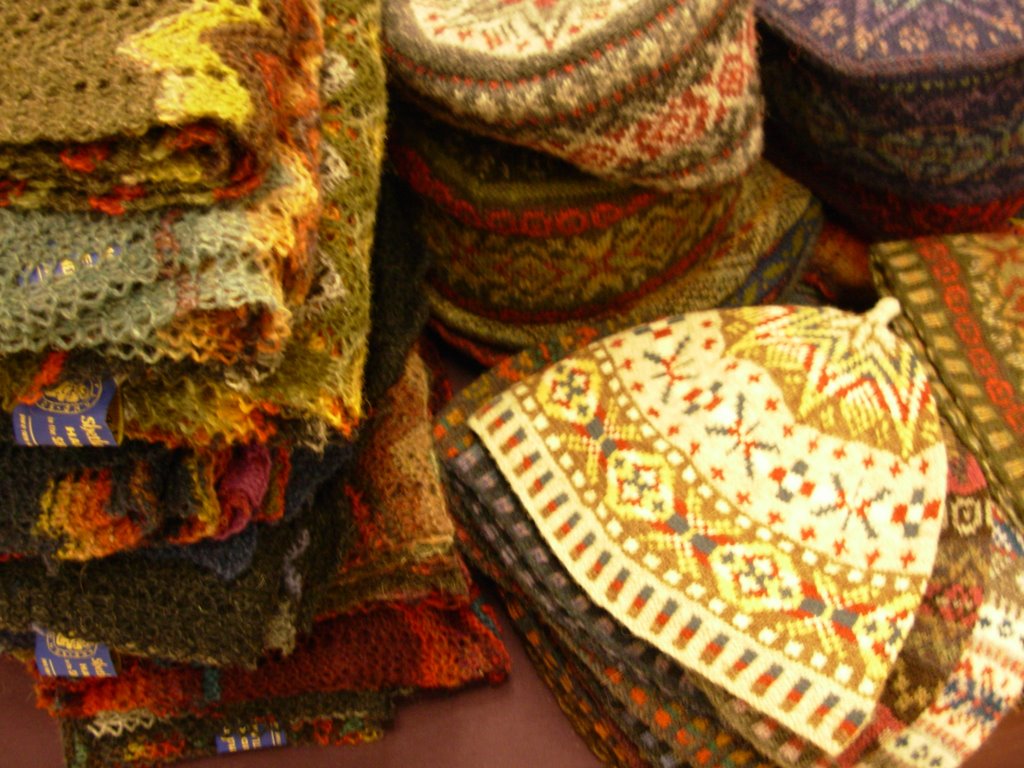
I have a bit of a thing about traditional Shetland knitwear, particularly the old-fashioned Fair Isle patterns. I have to restrict my visits to Jamieson’s emporium in Lerwick, otherwise I would end up becoming a gansie addict, overwhelmed by that glorious smell of lanolin you get from native Shetland wool.
But hand-knitting (with needles) is a dying art. It is incredibly time-consuming, highly skilled and poorly rewarded. Its more modern offshoot, hand-frame (hand-operated machine) knitting is nothing like as common as it once was. But still, I was shocked by the few representatives of Shetland knitting (hand or machine) at the Christmas Craft Fair in Lerwick yesterday.
This was partly selfish, as I was keen for Susan to buy me a slip-over Fair Isle for Christmas (found one, actually, in a lovely shade of blue). But also, I truly believe Shetland knitting (particularly the unique, lovely and rare handknits)is one of the community’s greatest cultural and artistic assets. Shetland jumpers were worn on the first successful Everest climb. They have traversed the world on board a million ships, become a generic name for a type of pullover. And that really infuriates me, seeing fake Fair Isle or clothing labelled ‘Shetland’ for sale in chain stores or catalogues, manufactured in the Far East in factories.
Two years ago, I set up a small operation, getting scarves and hats hand-knitted. Shetland Combat Sea and Mountain Knitwear (‘Naturally Northern’) was born. The idea was to pay knitters a proper fee for the hours spent on each item, and sell them as exclusive, hand-made, geographically specific items.
I sold two hats. They were lovely, warm, and expensive. There was, or didn’t appear to bem, any market for them.
And now knitters are outnumbered by photographers by more than two to one at the Christmas Craft Fair.


Leave a comment