
in the summer of 2020, I became a cleaner at the local health centre. Six nights or early mornings a week I vacuumed, scrubbed, mopped, wiped, disinfected and binned. Random thoughts occurred.
Hoovering. Havering
Hoover. I have hoovered. I will hoover. I have been hoovering.
This carpet needs hoovered.
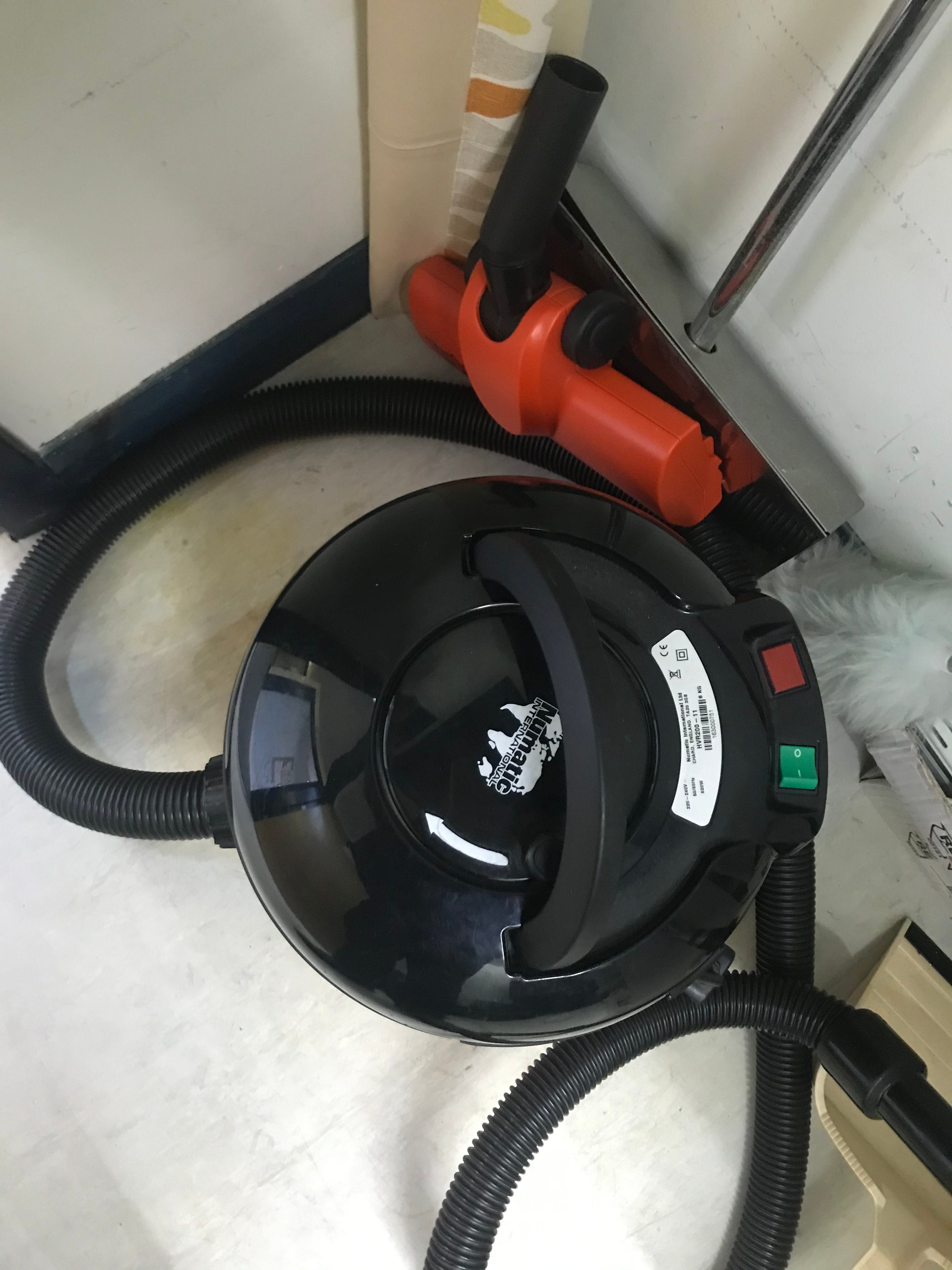
Except it’s not a Hoover, of course. It’s a vacuum cleaner. This particular one is manufactured by the British company NuMatic, and is commonly known as a Henry. Or a Henry Hoover. Not made by any remote offshoot of Hong Kong’s Techtronic Industries, who own the Hoover name.
Henry has a hat and a little face. I’m not imagining this. I’m not hallucinating due to stress and I haven’t just munched some magic mushrooms or dropped a tab of acid. Henry has two little eyes painted on his cylinder, and his nose is the suction tube. If you see what I mean. Like an elephant’s trunk. Sort of. But much longer, and with the optional Turbo Brush attachment. I highly recommend the Turbo Brush Attachment.
There is a Dyson, one of the hand-held models, lurking in a cupboard. But I’ve never felt entirely at ease with Dysons, plasticly beautiful though they may be to some. Being bagless is one thing. The Henry has a bag, a bag which needs to be changed fairly often, disposed of. The Dyson can simply be emptied with a few clicks, shakes and tugs, into a bin or the breeze, but it has filters, it has complications. Sir James Dyson, the thoroughly British inventor, now manufactures mostly abroad, including in China. The stuff he makes is always impressive, full of form that initially looks like content: you may not remember the ball-barrow, his first wheeze, a wheelbarrow with a sphere instead of a wheel. Marvellous, we all thought. Breathtaking. It caught on. And then it didn’t. Sales fell away.
I like the Henry because it’s very simple. It does what it’s meant to. It sucks. It stores dirt. In a bag. You dispose of the bag. Get rid. That becomes someone else’s task. And a Henry is a more-or-less contained system. Secure. So much so that it is recommended by many health organisations and hospitals for clinical environments. Like surgeries. Like the one I’m hoovering in right now.
Call me a sucker if you wish. Sometimes I talk to Henry. Sometimes he talks back.
This surgery has some ancient carpet tiles, some worn to a smooth grey sheen, and a lot of vinyl floor covering, carefully designed to look both clean and dirty at the same time, both speckled and sparkling. It was installed by the local Health Board, which technically owns this building, and covers not just the floors of the treatment room and doctor’s consultation room, but about four centimetres of the walls. It’s meant to be hooverable and moppable right into its smooth and rounded corners. Except the glue holding it down is coming away in places and there are gaps.
Sometimes, not every day, not even every week, I investigate such gaps with an old toothbrush, and spray some anti-bacterial liquid into those murky crevices.
Because that’s my job. It’s what I do. What I am. A cleaner. The cleaner.
I wasn’t always a cleaner. I have done other things, been other people. For many years I took nothing to do with keeping things clean, rarely noticed if something was dirty and wasn’t, at times, particularly clean myself. I’m sure people sometimes described me as a mess, or a complete mess, or messed up. But never to my face. Or rarely.
Now I hoover. And I mop. I clean.
*** *** ***
Vileda
Let me tell you about my mop. I’m delighted with it.
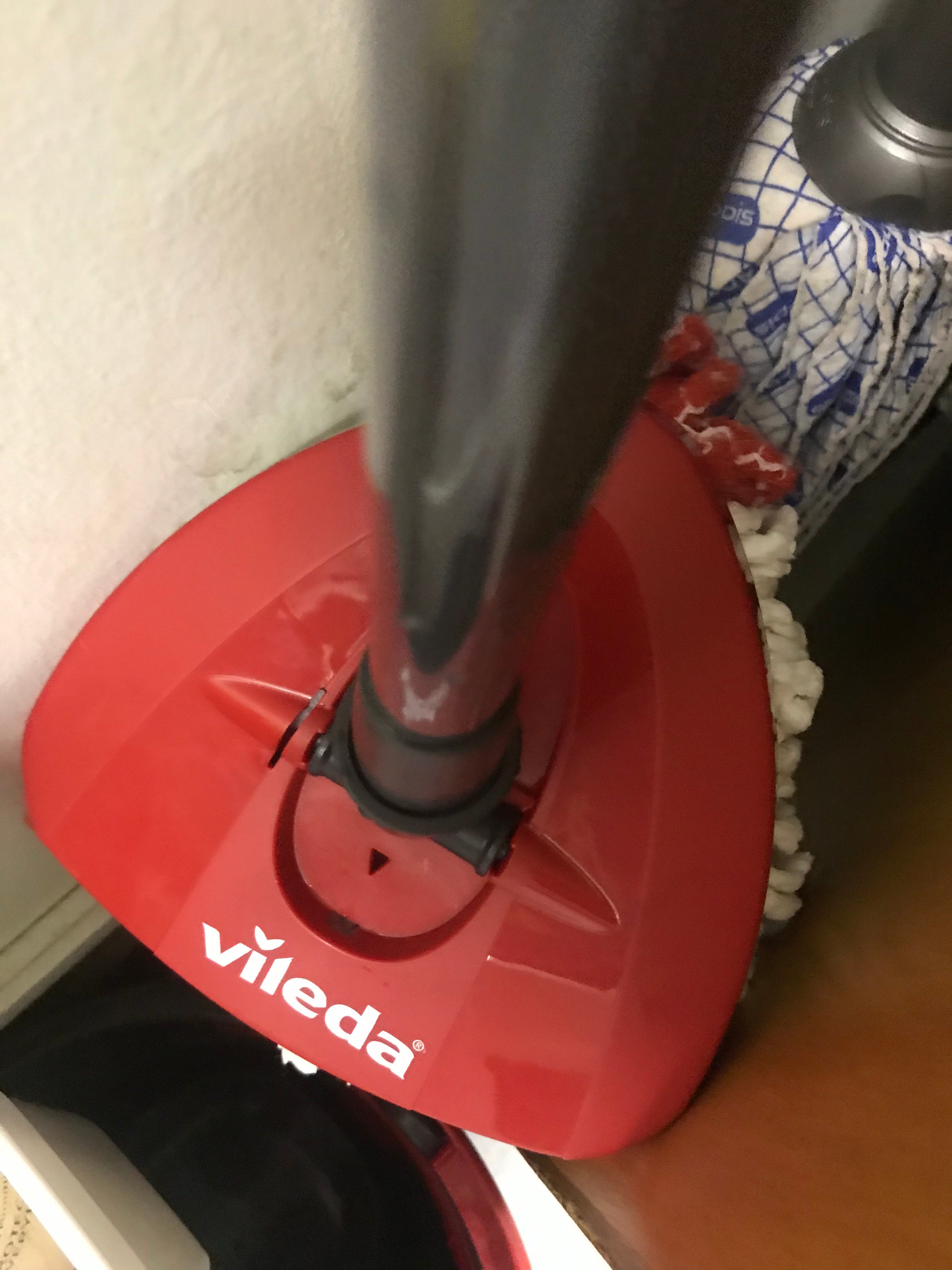
It’s a Vileda Turbo. I know, more turbo action. All it means really is rotation. The Henry Turbo Brush spins and so does Vileda. Actually, it’s not simply a mop. It’s a mopping system. You buy the complete kit. This comprises a mophead festooned with whiter than white dreadlock microfibres, flecked with red strands which are supposedly and secretly of a different, dirt-extracting composition from the white ones; an extendable pole (stretch to fit your exact height and arm length) and a bucket. The bucket is the key, as it possesses, instead of a recessed colander to squeeze your wet mop into, a bowl full of holes that rotates at high speed when you press an integrated pedal with your foot. You allow the mop handle to spin in your hands and centrifugal force extracts the water from the mop. It is a thrill and a delight, and it lifts my soul every time I use it.
I’m easily pleased, clearly.
Vileda (I prefer just to call it The Turbo, conjuring images of ferocious 1980s super-saloons, Audis and Saabs and Escorts) is advertised at around £35, and with the promise that it will destroy 99 per cent of all known germs just using plain old water. No disinfectant, no detergent. Of course, in a medical setting, that’s not acceptable. I like CIF or Flash floor liquid, two caps a bucket, no need to rinse. Or so they say. I rinse anyway.
And I speak to Vileda. Vileda tells me stories. True stories. Her name, for instance, comes from the German Wie Leda, which means ‘like leather’. Her second name is Freudenberg.
The Freudenberg group is one of those German ‘extended family’ private companies which, while retaining its base and identity solidly in Baden-Wurttenberg, has massive worldwide reach and production. Originally, when founded in 1849 and for the next 80 years, a tannery, it has diversified into everything from flooring to wine. And cleaning tools, of course.
Shoes. You’d expect a leather manufacturer to move into shoemaking. But Freudenberg did it under the Nazi regime, taking over more than one Jewish-owned shoe company. They prospered under the Nazi regime, with wartime leather shortages prompting the development of an artificial rubber called Viledon. Experiments to test its durability were carried out at the Sachsenhausen Concentration Camp. Prisoners were made to walk. And walk. And walk some more, in an SS punishment unit. In addition, the Freudenberg factories used forced labour, though the company is at pains to stress that all these workers were paid the same rates as their other staff.
The company acknowledges its guilt, and has apologised. But there is a highly personal aspect to this. In 2014, Dorothee Freudenberg travelled to Haifa in Israel to personally apologise on behalf of her granfather to 85-year-old Emil Farkas, who had been one of those Sachsenhausen walkers. He went on to become an Israeli citizen and athlete. Freudenberg provided him with cash and the two became friends.
Viledon. Vileda. Like leather.
The Kata of the 13 Bins
I have a programme, a ritual for my cleaning. I am paid to clean two hours a day, six days a week, though I can usually finish up in an hour and a half if I take no breaks. I call it the Kata of the 13 Bins. A kata, for those unfamiliar with martial arts, is a Japanese word meaning “form”. In Judo, Karate, and now in most martial arts, it described an organised pattern of moves, a practice routine used to train and prepare. You can go through a kata on your own, or at a group training session. There are meditational katas, aimed as much at spiritual as physical training. A kata enables you to memorise your warrior movements, until they become second nature and enacting them is natural, fluid, and incorporated in muscle memory.
And a kata, perfected, can bring a kind of inner peace. Though in most forms of meditational practice, such as Zen Buddhism, you never would. You never will. But you do, you act, and you stop having to try
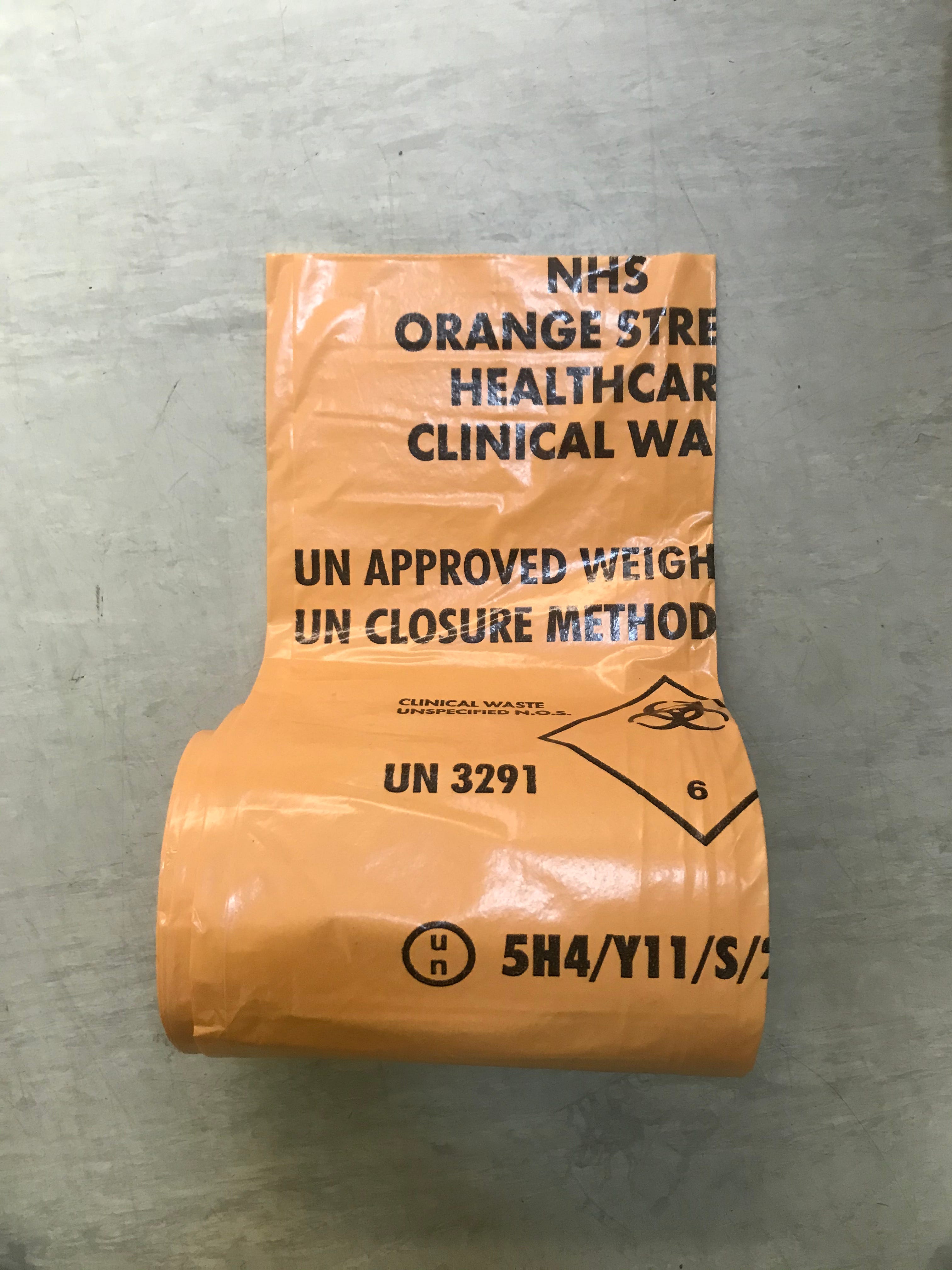
I call it the kata of the 13 bins, but it doesn’t begin with the emptying of waste bins, those receptacles are the waymarks of my nightly journey. I start with the ceiling, and the tops of doors, and come to the bins second, the emptying, the collecting, the bagging and sealing. The single most important part of my nightly task, as this is the clearest sign to those who will work here tomorrow that someone has come into their place, their daily life, and removed the waste products of the previous day, the detritus, the signs of all that was done here. And those can be, often are signs of pain, injury, sickness, death. And healing. The pristine plastic bags in each of the 13 bins indicate that a ritual cleansing has taken place, that the building is fresh and available for them to practise once more their healing arts. A kind of exorcism.
Maybe that’s a bit grandiose. After all, I’m just the cleaner.
All photographs Tom Morton

Leave a comment