
.
The Red Guitar Spotify playlist. From Steve Earle and Neil Young to…Red Guitars:
It’s out of print now, my novel Red Guitars in Heaven, though you can buy a used copy easily enough on eBay or Amazon. It has its moments, and a few people liked it a great deal back in 1994, when it was first published. Some still do. Some hate it. There are parts that make me flinch now with embarrassment. But it existed and it exists. It made its mark on a few lives. It’s about loss of faith. It’s about sex. It’s about Scotland and it’s about guitars.
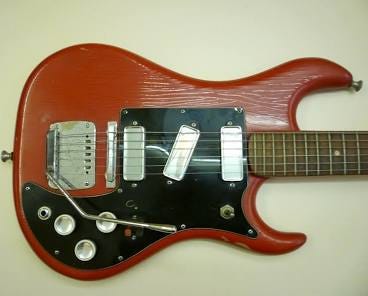
There’s a red Fender Stratocaster (cream Scratchplate, Mexican reissue) on the cover, which was designed by the great Jim Hutcheson. But the guitar which inspired the book was a Watkins Rapier, in the window of Thomson’s music shop in Kilmarnock, gazed at longingly. It was redder than red, and Peter Goodwin at school had one. He, with his pal Alistair Webster, was in a band called Tangerine Heaven, and they said I could join if I bought a pickup for my Selmer ‘222’ acoustic. I still have the guitar. It cost dad 11 guineas, which would be about £160 today. The Selmer was and is a very poor guitar indeed – its price at the time defies belief. For 160 quid now you could get a very respectable Chinese-made electro-acoustic, but in 1967 I had a nasty little plywood clanger with rough frets; I thought it was an instrument of glory and delight. I played until my fingers blistered and bled. I played at the Gospel Hall and was not struck down by lightning for besmirching that building’s acapella innocence. Dad refused to buy me Peter’s pickup, and said Tangerine Heaven was a blasphemous name, and so I was banned from the band. I picked up Peter’s Watkins a few times, felt what seemed like weight and quality but was actually, in retrospect, flimsiness and bad construction. But its redness glowed in dream and memory.
Why red? Candy Apple Red is the Fender colour. It’s the colour of rock’n’roll. When the White Stripes formed, with Jack White wielding that ridiculous Airline 2P JB Hutto guitar (almost as nasty as a Watkins Rapier) it was all about white and red, the pure,
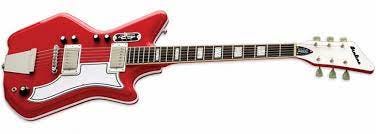
elemental, prime vision of a raw music capable of lifting heart, soul and body. Ask Mark Kopfler, with his red Strats. Alvin Lee, with his red Gibson 335s (I had a black one once; it sounded duller than a winter’s Monday morning in Millport.) Red is the proper colour for an electric guitar. It’s about the blood that flows in a human body. It’s physical. It’s sexual.
I used to have a red guitar
But I smashed it one drunk night
Smashed it in the classic form
As Peter Townshend might…
Loudon Wainwright III. ‘Red Guitar’
My first red guitar was a Hondo Strat copy. I bought it for £19 in maybe 1980 at the displenishing sale when Golumb’s music shop in Saltmarket, Glasgow closed down. It was white to start with, but I sprayed it red using tins of Ford touch-up paint from Halfords. I sold that to my friend Brian for £25. A bargain.
Things changed. Guitars came and went. A Gibson J40 acoustic I still yearn for today; a Gordon Smith, hand-made in Manchester. Guilds, other Gibsons, a long-term loan of that priceless 1958 Strat. At least, it was supposed to be 1958. Bits of it might have been. Leaving Glasgow, settling in Shetland. And then, the guitar of my dreams. A red guitar.
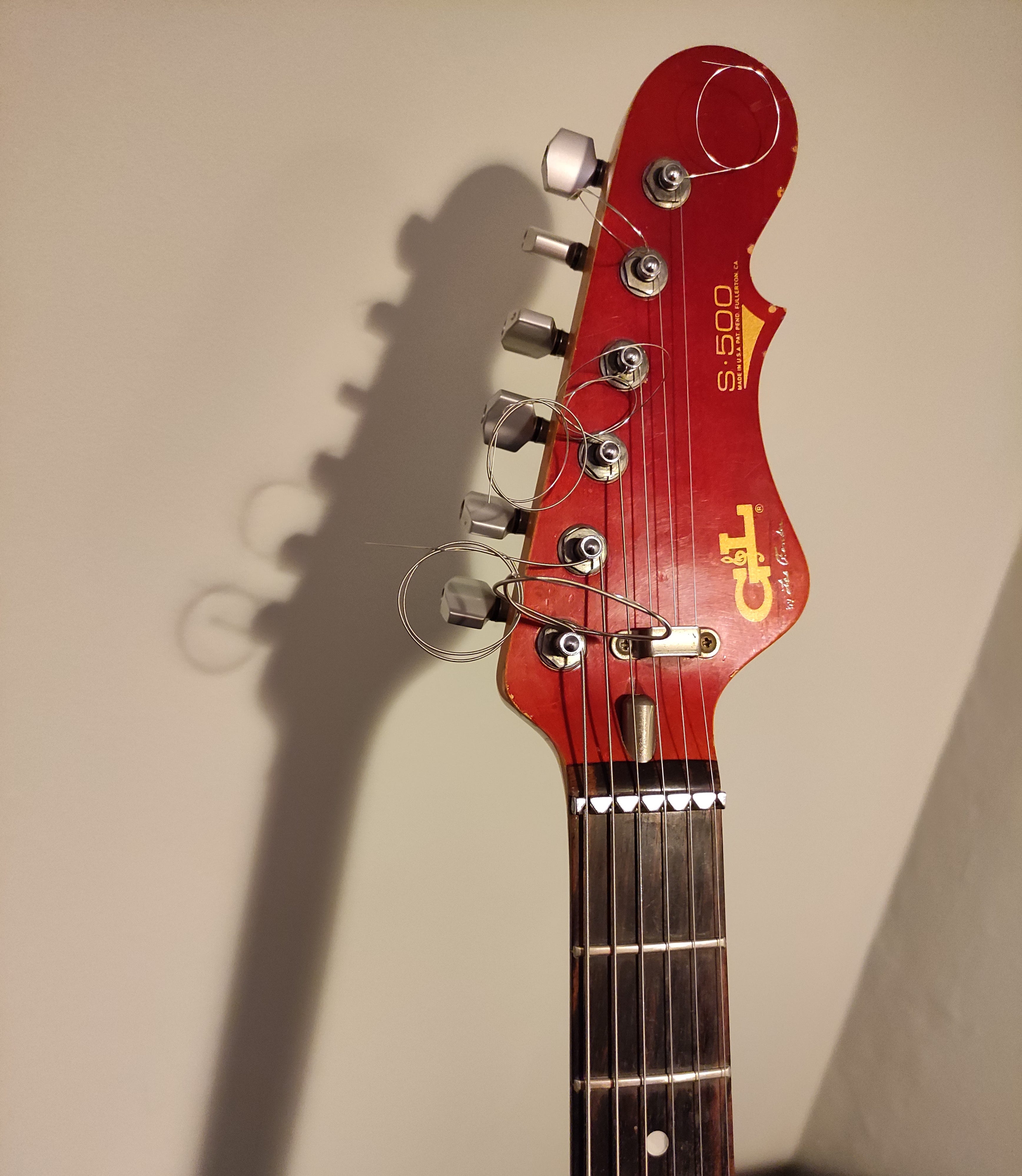
I bought it brand new, and at over £300 it was, at the time, very expensive. It was better than the Watkins, better than any dream of an electric guitar I’d ever had. And over the past week, it has come back to me, and I have cleaned it, polished it, played it. Looked at it and remembered. Because I can weigh 34 years of myself whenever I pick up that lump of wood, metal and wire. This is the guitar, not of a fantasy, but my actual life. It has seen children born and grown to adulthood. Houses bought and sold, crises confronted and averted. Governments have come and gone. The red guitar abides.
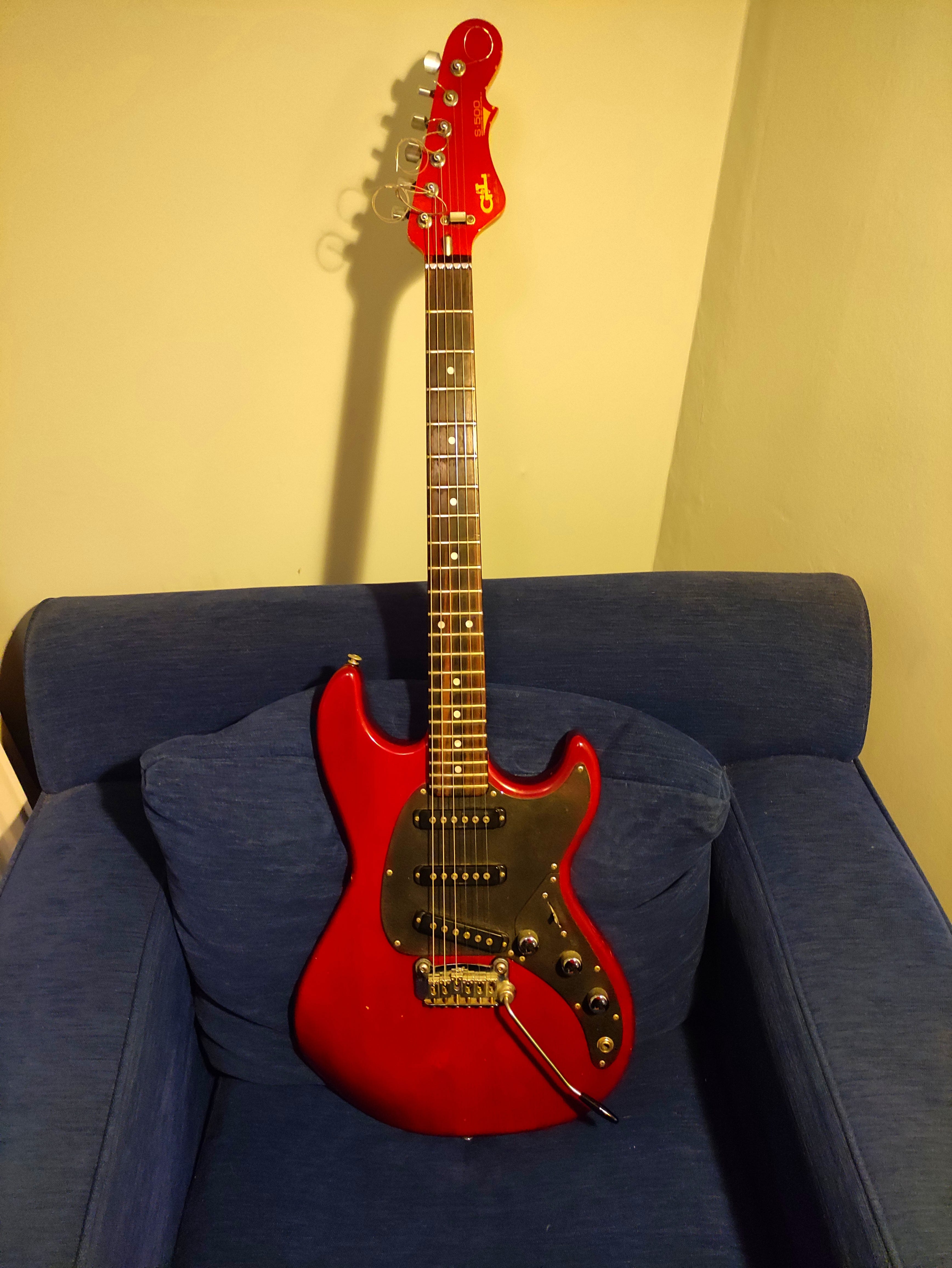
It’s currently owned by my son, who has given it back to me for safekeeping as he has nowhere to safely store it, his household being somewhat preoccupied with very young bairns at the moment. And another guitar he finds more to his taste.
I bought the G&L new in 1987, when I had some money and regular gigs to play, mostly in the Shetland Islands. The Zetland Beat and Rhythm Kings, Rockhopper Trawl, Morton and Nicholson. The Ferry Inn, the Booth, the Scalloway Legion,Hillswick Hall…and Kenny Johnson was in business as guitar dealer extraordinaire at the time, for a period the main Martin dealer in Scotland and the only source of G&L electric guitars.
The G is for George Fullerton and the L for Leo Fender. The very same Leo who designed and built the legendary Telecaster, Stratocaster, Esquire and Musicmaster. It’s no coincidence that the shapes of the G&L range are very similar to those classic Fenders. However, with Leo dead since 1991, the current G&L and cheaper ‘Tribute’ range are more like industrial copies than anything else. Good right enough.
Back in the 80s, G&Ls were hand-built and incorporated all kinds of Fender (Leo) innovations. This S-500 has been in the wars over the past 34 years but it sports the original hand-wound high output pickups, the unique ‘dual fulcrum’ tremolo system, a sublime alder body which in places is thinner than a Strat and much, much heavier, and a stunningly slim fingerboard with metal nut and locking Speigel machine heads.
This is a rare, early S-500 which bears Leo’s signature on the headstock (apparently a source of great disquiet at CBS-owned Fender) and a body shape subtly different from a Stratocaster. The pickups look chunky and crude, and the jack socket is a plain and simple quarter-inch on the top of the guitar. It sounds….well. It has a five-position selector switch and in out-of-phase mode, middle and bridge pickups in play, it will leave any Strat of any era for dead. Sweet, soaring and ringingly true, it is a stupendous guitar.
And it’s red. There’s something about a red guitar. When Magnus gave it to me I took it back to Glasgow and stripped it down. He reckoned it needed some work, but there were only a few chips and scars on the neck. I carefully smoothed out the damaged nitrocellulose, took off the old and dull strings, cleaned, polished, put new Rotosound strings on. Tuned it. It was always rock solid at staying in tune. It still is.
Then I looked at it and looked at it a bit more. I remembered and dreamed. I picked it up and played. There’s an old amplifier here, and a bunch of noisy students living on the floor above who deserve some sonic annoyance: plug it in. Hit that E major chord…
The hopes and dreams of being in a band. Not just the threatened, nervous joy of performing, but the way the noise we made brought the big, brash, glamorous world of rock’n’roll to tiny venues on our little island. The way a red guitar was like a magical symbol of all that was possible – connection with an audience, recognition, success – and the unity and companionship of a gig, band and audience. Crazed, rammed nights at the Vidlin Hall, hundreds heaving with drink and drugs, the dancefloor littered with smashed poppers. The times when everything gelled into an immense, perfect sound. Cover version and original songs that were every bit as good. We could take this all the way. No really, we could.
We didn’t of course. But the red guitar survives. The colour of noise, glistening and crunching and twanging and screaming in the night.
The students are banging on the floor in annoyance. Let them.
And yes, I know the G&L S-500 looks just like a Watkins Rapier.
This old guitar ain’t mine to keep
Just taking care of it now.
Neil Young: This Old Guitar
The Bluebells: Red Guitars
Loudon Wainwright III: Red Guitar
Billy Bragg: This Guitar Says Sorry
Red Guitars: Good Technology
Dwight Yoakam: Guitars, Cadillacs and Hillbilly Music
Steve Earle: Guitar Town
David Sylvian: Red Guitar
Talking Heads: Electric Guitar (live)
Erik Wøllo: Red Guitars
Earl Hooker: Blue Guitar
Ray Wylie Hubbard: Old Guitar
Australian Crawl: Red Guitar
Tocotronic: Electric Guitar
Micah P Hinson: Old Guitar
Prince: Guitar
Jerry Brewer: A Preacher’s Guitar
Chris Rea: Electric Guitar
Fluke: Electric Guitar
Guy Clark: The Guitar
Neil Young: This Old Guitar

Leave a comment