
One: Spaghetti junctions
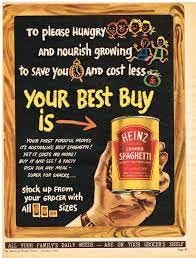
Spaghetti came in tins and was luridly orange, tangy-sweet with a sauce which was supposed to be tomato but looked more like it was made from tangerines. Heinz spaghetti. Before hoops, which didn’t arrive in Britain until 1965. Soft, almost soluble pasta in short, swallowable sections. I loved it. Then one day dad was presented with a gift from one of his patients. A strange, absurdly long paper package, thin, round and a virulent blue colour with a red and yellow label. Hard, like a broom handle. And this was somehow spaghetti too.

Dad was a dentist and we – me, my mother and two sisters – were crammed into the three rooms not taken up by his dental practice at 1425 Pollokshaws Road, Glasgow. At the time, the very early 1960s, the historic burgh of Pollokshaws was in chaos as old tenements were torn down, soon to be replaced by vast tower blocks. The house was caught between the redevelopment of Shawlands and the erasure of the old Shaws. Soon we would move 30 miles to the coast at Troon.
I stored memories: gas day, when black cabs would queue outside the surgery to take away howling, sick and bleeding youngsters, in for their “upper and lower clearances”, once seen as a generous Glaswegian 16th birthday present: an absence of decaying teeth and brand spanking new dentures was both economical and aesthetically desirable. Mum would take me and my sisters out, down into the old Pollokshaws centre, where the River Cart sometimes in spate, would froth yellow and toxic. We would gaze at it fearfully through rusty railings. Dirty Dick’s scary junkshop, run by a man with a huge coat held shut by string. Greenview Gospel Hall, where we went every Sunday to Open Our Hearts and Let the Sunshine In, whatever that meant.
And suddenly this spaghetti. The word ‘pasta’ was never used. I’m guessing this was traditional Garofalo spaghetti pasta from one of the several old-school Italian delicatessens that existed in the city, like the long-lost Fazzi Brothers. Fifty centimetre pasta packages were once commonplace. Dad had many patients from Glasgow’s immigrant communities, and this was probably from a grateful recipient of his famously gentle drilling touch. It looked outlandish, garishly packaged and branded, like a mysterious message from another world. Mum had never cooked such a thing before. But she took advice, and there was this…stuff. White, coiled on a plate, slimy and steaming and sauceless, because a recipé for ragu hadn’t reached 1425 Pollokshaws Road. I was maybe six and looked at this maggoty mess of thin worminess in consternation. If it looked bad, it tasted worse, or rather of nothing. And it was slippery and just…not real spaghetti. The stuff that came all orangey-red and chopped into pieces you could spoon into your mouth, where its pungent sweetness satisfied, particularly if accompanied by sausages. Sausages, after all, were the boys.
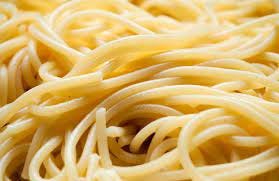
I spat the horrible white stuff out. Dad told mum to take it away, and maybe tins were opened instead, sausages fried until they spat and blackened. Lawsons of Dyce. Mckellar Watt for Meatiness.
In the years to come, we would venture as a family to France and Spain, carrying much of our food in the caravan but gradually encountering and learning to love everything from octopus to snails, nearly raw steak, cheese that reeked of drains, shrimp, mussels and astonishingly strange cold garlic coup. Croissants, churros, hard cylindrical bread. But not pasta. And we never went to Italy as a family.
I did, for work many years later. We stopped in a picturesque roadside cafe outside Rome, a team of loud and impatient TV people, and were served bad bread covered in blue mould, sloppy, overcooked white pasta with a cursory slurp of olive oil, then tinned fruit salad heavy on pineapple chunks. On every other subsequent visit to Italy, including a holiday in Tuscany, the food has been uniformly terrible.
Maybe I was unlucky. Back in Glasgow, I had learned to love proper pasta, served al dente in fragrant sauces from the likes of Fratelli Sarti and that wondrous institution, La Lanterna. The first wood-fired pizza oven in the city, at O Sole Mio in Bath Street, was a revelation almost as overwhelming as more recently, my first exposure to Paesano in Kelvinbridge. And now, from Eusebi to the still going strong Piccolo Mondo or La Fiorentina, you can eat better than the talented Mr Ripley ever did. And never leave the Dear Green Place.
In the late 1990s, I was living during the week in a disreputable Italian camper van, in the car park of BBC Inverness. One night I cooked some supermarket pasta on the little gas hob, fried some garlic in olive oil, added a spoon or two of green pesto and chilli flakes, then stirred the lot together and ate it sprinkled with parmesan, washed down with a bottle of Montepulciano. I ate while listening to a Jackie Leven CD, watching the strange stain in the Highland sky that was the Hale Bopp comet. Somewhere nearby in the Crown area of Inverness windchimes clanked and tinkled. Over in California, members of the Heaven’s Gate cult were contemplating suicide, and on 26 March, a few days later, 39 bodies were discovered in the house the group shared in Rancho Santa Fe, San Diego. They had previously eaten 37 turkey pot pies and left seven quarts of unopened Starbucks Java Chip ice cream in their freezer. They had consumed phenobarbital with apple pies and vodka, and were known to be fond of pizza, but there is no record of their feelings for spaghetti.

Leave a comment