
Living among vikings, iron age broch-dwellers, witches, naval officers and angry ministers. One wind to rule them all
I love these nights, the darkness battering and blustering in a big, not yet overwhelming wind. Deeper into winter and the house will shake, vibrate, thrum; we’ll lose power, struggle even to reach the washhouse where the ever-reliable Honda generator crouches, unserviced in a decade, on the original oil, ready to save us from an absence of internet.

But now, on the outside edge of autumn, a salt rain sprays windows and walls, the roar of this westerly breaking waves over one beach coupling with the shingled rattle of the other. Because the sea is right here, there, everywhere. Our old house is built on a sand and pebble spit piled over millennia between the West and Aest Ayres, the devil and the deep blue. The Aest Ayre begins maybe eight metres from our front door, behind rock armouring since one particular high tide reached the level of our Rayburn range’s hot plate.
A former Kirk manse, many of its timbers are shipwreck salvage. The basis of the haa or hall the manse was extended from is a 7th century monastic settlement. The old circular graveyard nearby is a former Iron Age broch. Vikings raided, overwintered, settled. There are no ghosts, not in this wind. Just the occasional glimpse of the multiverse.

Here we inhabit the past, weather the same storms as those who lived here ‘before’: Thorvald Arvaldsson, stranded viking raider; the Reverend John Gifford, ferocious 16th century cleric; Abbot Ciaran, follower of the White Christ, seeking escape from his Irish sins. Unknown seal hunters in their great tower, waiting for the Little Ice Age to wipe out their race, the people who will someday be called Picts. The doomed Royal Navy men of 1914’s Northern Patrol, carousing in the hotel, commandeered as an officers’ mess. The so-called witch executed for cavorting with the devil up the road at Eshaness. The spy hunters and spies of World War Two. All with us, all huddling and rejoicing at being sheltered in Shetland. Hjaltland. Zetland.
Crossroads of the North Atlantic and the North Sea. A lot has happened here.
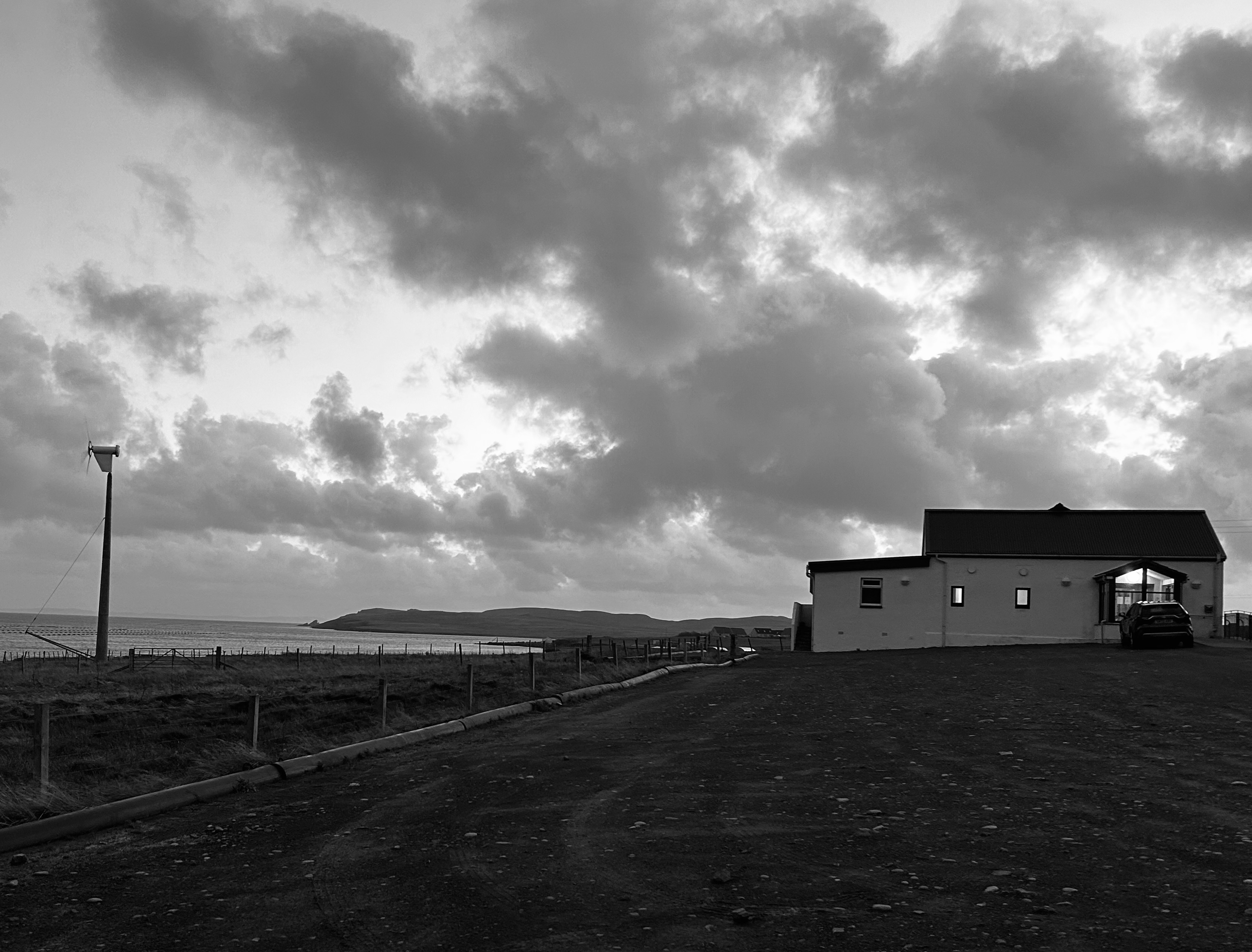
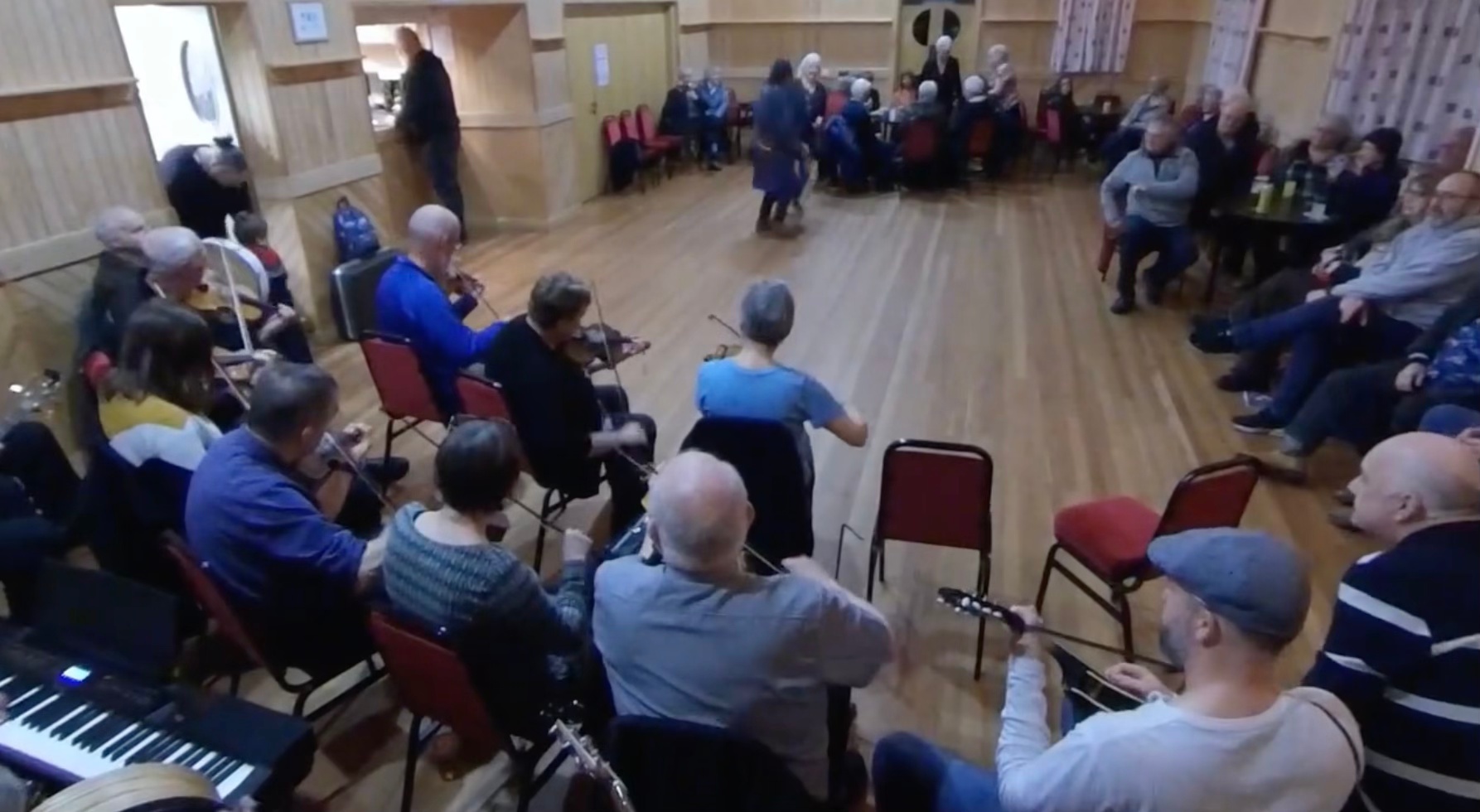
Along at the community hall, the new wind turbine is whirring whenever its algorithm considers it safe, and for the first time in history, every corner of the hall is delightfully warm enough for Fair Isle gansies to be comfortably removed during strenuous eightsome reels. Elsewhere, however the islands’ state-of-the art renewables are taking a hammering. Windiest place in Europe, they said, and the eyes of Scottish and Southern Energy lit up at the thought of 102 gigantic whirligigs pumping out clean power. It’s just a few weeks since the official commissioning of the Viking windfarm, and the other night it broke. Well, one blade of one turbine fell or was ripped apart.

Sage heads are now being shaken. How many more football field sized blades will fail when the really big winter gales arrive? Who will fix them? How? Is this much-vaunted power source just a bit too blustery for current glass fibre fabrication?
Thorval Arvaldsson, if that was his name, came here on an open longship from near Bergen. Pirate warship or merchant vessel, sometimes it was difficult to tell the difference. Maybe 70 feet long, crewed with up to 40 oarsmen-come-warriors. Each had a chest with their belongings or booty, which they sat on to row. A tent for shelter. Square sail, rudder, keel but limited manoeuvrability. A following wind was best and May to September the window for relatively safe sailing. The Vikings may have ravaged Europe, touched America, were the great and most ruthless seamen who ever lived, with the best technology of their times. The ‘sun compass’. An unmatched knowledge of sea, landmarks (‘maeds’ used by fishermen into the 20th Century) and wind.
But they knew their limitations. They knew that in the end weather conquered. Ruled then, rules now.
Sometimes all you can do is run for shelter. And be grateful for it.
The Hillswick Hall Welcomes Its Newly Commissioned Wind Turbine and Air-Source Heat Pump

Gone are those nights when my head was frying
While my feet were so cold I thought they were dying
The hall had roof-mounted convector heaters
Running from a 50 pence electricity meter
While icy winds chilled you from waist-height down
Your scalp was toasted, from brow to crown
Ice formed between stacking chair and bum
And your fingers gradually went completely numb
All over now. The windylight’s spinning
At the 500 drive everyone is winning
Musicians play and the joy is eternal
Dancers whirl and remove their thermals
The wind is blowing, the heat pump’s pumping
Every corner’s warm and the joint is jumping
Gone is the frostbite, gone are the chills
And the feed-in tariff is paying the bills
Outside, the wind’s battering flora and fauna
In the hall we’re enjoying the brand new sauna
Pedro’s Northmavine collection is launched
And my personal experience of the hall’s new-found warmth was at the launch party for Peter Sinclair’s new book of fiddle tunes, last weekend. A joyous occasion which you can get a taste of here:
https://www.facebook.com/share/v/CDwV28AcjETPqyHo/

When the guizing had to stop…
Meanwhile, I ceased to be a Shetland Islands Council member at midnight on Halloween. That particular form of guizing is over.

Leave a comment