
The Shetland Decapitations, episode one: Headfirst
In the windswept Shetland Islands, people are losing their heads.
A series of bizarre ritual murders sees eminent members of the community dismembered, their body parts left in embarrassing positions. While the energy company building the world’s biggest wind farm on the islands fights to stop the sabotage threatening its operations.
Detective-Sergeant Mary Lou Everly and Constable Peter McKinstry find themselves in their own battle – against terrible heavy metal music, militant knitters, bad reestit mutton soup and a sinister cat food magnate.
And the eternal, battering, killing wind…
“Head…head…first”, said Detective Constable Peter McKinstry, out of breath and gasping from his scramble up the Knab from Twageos Road. His usual Dickies denim jacket, bulging and ill-fitting at the best of times, flapped open over a Fair Isle gansie in lurid Whalsay blue. He exuded a pungent aroma of Fort-Chip-Shop-flavoured sweat.
Mary Lou Everly (though she avoided using the ‘Lou’, for cultural reasons, and had long ago removed the hyphen that separated her first two names) regarded him balefully. She too was sweating, but the sharpness of perspiration was tinged with Versace Eros Pour Femme and Dove antiperspirant, a combination she’d started using at university following a shoplifting spree in Boots. Now, morning by morning, it reminded her that she hadn’t always been the upstanding defender of law and justice she had since become. Detective Sergeant? Who’d have thought it? Once she had been a thief, albeit a very small-time and occasional one. If you discounted the twice weekly Woolworths Pick’n’Mix raids at stores throughout central Scotland. Anyway, the Dove and Versace niff relayed an important message for her and indeed all cops: you can get away with it.
“Headfirst? Thinking of taking a wee dive into the sea, Peter? Had enough of the pressure? Wild swimming, cavorting with orcas? Or are you fancying a wee watery ending? Too wet, man. Just keep eating those crabstick suppers from the Fort and you’ll be dead soon enough. They fry in lard there, you know. A suicide supper every lunchtime. And that’s not counting the inevitable heavy metal toxins from humanity’s besmirchment of the oceans.”
“I don’t think heavy metal works underwater,” said McKinstry, a wet rattle sounding from his ample chest. “Too burbly. Take Master of Puppets by Metallica…”
“Let’s not,” said Mary. She hated Metallica and all male metal guitar thrashing, while McKinstry’s tastes in music, which he often tried to insert into both conversation and any handy CD players, were for the kind of extreme rock that sounded to her like jet aircraft taking off and crashing, to complicated time signatures, very quickly. Her discarded, defiantly wired headphones had been playing some chilled early Beth Orton on an ancient iPod, loudly enough for her not to hear the muted buzz from the iPhone she was supposed to carry, always. But was sitting, disgracefully uncharged on top of the microwave at home.
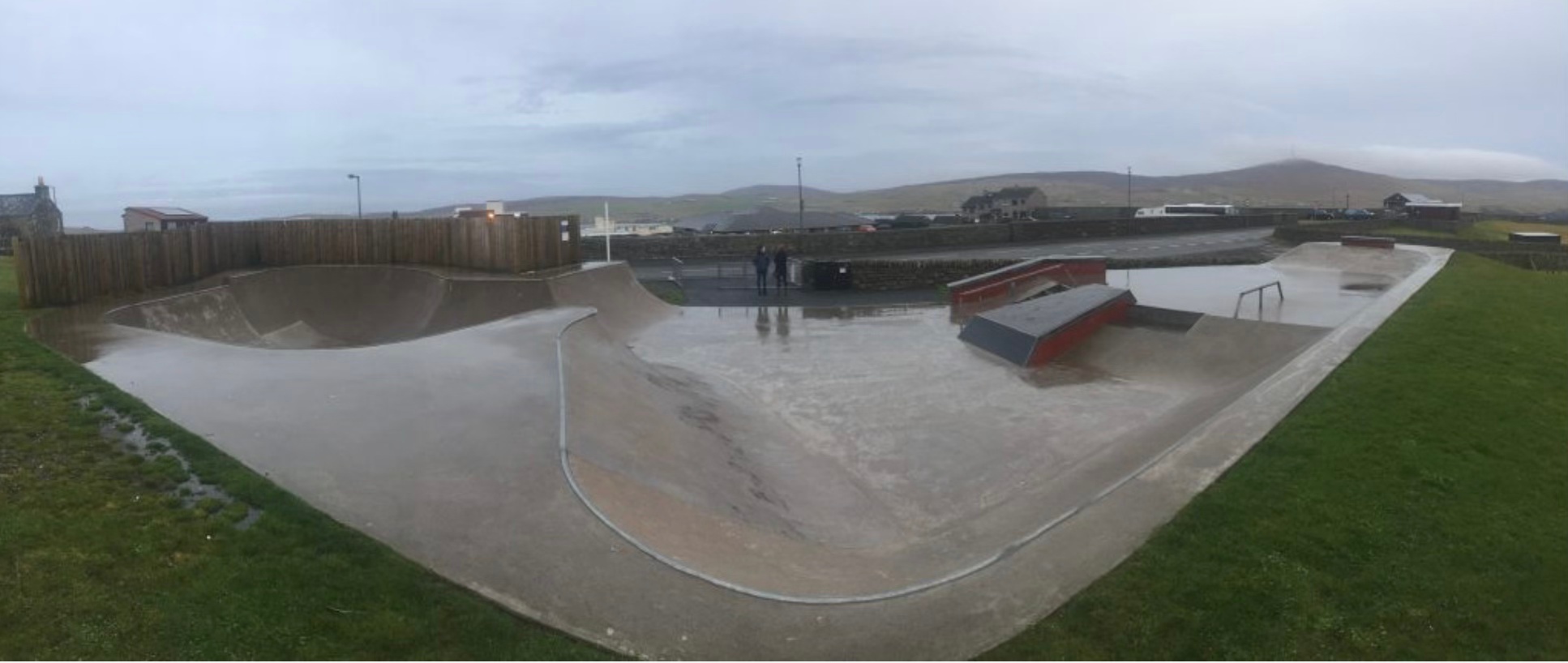
Her breathing was even, despite having run the Knab loop once already. She’d been doing some muscle stretches on the bench at the old gun emplacement high on the peninsula that stuck out from Lerwick south towards the less important parts of the world. Like Britain, whatever that entity was composed of these days. She’d been about ready to set off for a second two-mile jog, down the steep path Peter McKinstry had just waddled up, then along Twageos Road to Commercial Street and back up here to her car, which was parked next to the world’s most spectacularly sited skatepark. Secretly, she longed to have a go there, flying high into the Shetland sky. She’d seen pictures that made the kids who skated there look as if they were skimming the Bressay Lighthouse on the other side of the Sound, scornfully, like sullen, supercool gods. Or bad angels.
”Head. Not headfirst. Found first. First thing you have to do, Sergeant,” said McKinstry, his respiration having returned to whatever unhealthy state he classed as normal. He was buttoning his jacket, that blinding flash of Symbister blue knitwear appearing now only in clumps, and his demeanour was returning to its everyday condition of supercilious boredom, or as near as he could get, given the obvious importance of his news. “Head. They found the head first. Dead, obviously. Head. First. Prior to anything else. Before other pieces. Of said individual. Which haven’t. Been found.”
“What, a dead head? Somebody being doing some gardening? Bit late for that Peter. It’s only June.” Eight days until the solstice, the longest day, the season of the ‘simmer dim’ in Shetland. The midnight sun, except it was usually a period of mist, cloud and gloom. Eternal half-daylight. Not sunshine. Mostly illuminated murk. But lots of it, and it made people act oddly. Mary felt a gnawing at her guts. Maybe she needed some carbs. There was a muesli bar in the car. She swigged some water from her super-expensive Nike canteen, tasting the aluminium hydroxide used to make the local H2O pristine, pure and peatless. She’d have preferred it brown and phenolic, like good whisky. There were claims that purifying Shetland’s naturally brown water caused dementia. In her experience, there could be something in that. Still, it was better than the lumps of landscape and miniature prawns you sometimes got from unfiltered Northmavine tapster.
A head? A bodily severance? A dismemberment deliberately caused by a human as opposed to, say, a stray rotary lawnmower? Surely not?
“A real head, as in decapitation? Do you mean an animal?” Sheep’s heads were used in occasional practical jokes in the outer reaches of the isles, balanced on car bonnets, left at doorways, secreted in freezer compartments. Often more than a jest, a piece of gory vengeance against gossip or bully; or a soothmoother, an incomer with a superior attitude. Once they’d been used in a style of soup. Not soothmoothers, Sheep’s heads. Sheeps’ heid soup, with the eyelids a particular delicacy. Eyelids first, then the brains. Until the laws against eating brain and spinal cord tissue had been brought in. She’d had some, illegally, once. It had tasted of burnt jumper. Apparently searing with a red hot poker was de rigueur in the traditional recipé.
“It’s no’ an animal heid, sergeant.” McKinstry swallowed. His Shetland accent was emerging, usually buried in his conversations with her beneath a layer of was called, locally, knappin’: an attempt to upgrade dialect speech for the sake of the soothmoothers. Often carried out with a sarcastic twang attached. “It’s a human een…one. In fact it’s a heid’s heid. The heid o’ social engagement at da wind farm, yon Feargal Birkadale. The bruks o’ him’s still…missing.”
Mary had an overwhelming desire to giggle, though the awful gut ache was getting worse. Apprehension. Nerves. This kind of thing didn’t happen in Shetland, and never had happened. Maybe she was dreaming. Perhaps she’d wake up. Find herself back in her normal life as a detective sergeant in this tiny northern outpost of the CID, where drunken assaults, stolen cars (while drunk) housebreaking (while inebriated), and hapless attempts at drug smuggling and dealing (while stoned) were the worst that came her way. Violence? There was some. But it rarely went further than absent teeth or gouged eye sockets. Disco and Domestic, Chief Inspector Fotheringham-Hyphen- Smith called it. Of course there was the hurting of the children, something which seemed endemic wherever you went. Mary hated that, but it was no worse here than anywhere else.
Lately, of course, there had been the anti-wind farm campaign. Graffiti (‘DOWN WITH WIND YA BAS’ and ‘BIRD MURDERERS’ on two turbines near Nesting, and a slightly more worrying attempt to hit a stationary blade using a home made rocket-launcher firing compacted peat briquettes; all had missed.
Feargal Birkadale was a smoothly gibbering ex-hack who’d been imported by the worried developer, Archipelagic Renewables PLC (commonly known as Archie, or sometimes Fucking Archie) to convince locals that letting Shetland become what amounted to a single gigantic wind farm was actually a good idea: Covering the place in huge white whirligig’s bigger than the Eiffel Tower, churning any passing flocks of birds into feathery mince. Or so Mary murmured darkly to herself. From her occasional encounters with Birkadale and his pontificating supercilious quotes in The Shetland Times, Shetland News and on the two local radio stations, he was a flack-catching arse. But alas, it was not his arse that had been discovered, it seemed, but a far less useful part of his body.
“Where?”
“He’s at the museum. Hay’s Dock. In the Industry, the sixareen, ken, the big wooden…”
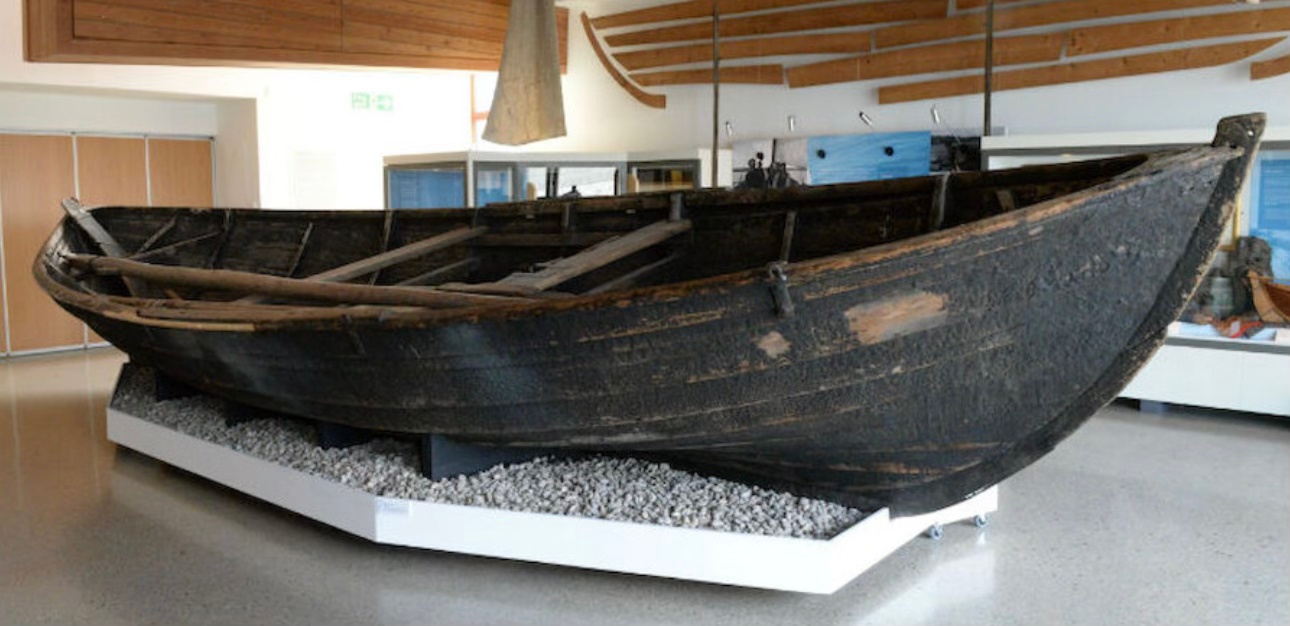
“I know what a sixareen is, Peter. I’ve been to the museum.” The gigantic 40-foot long haaf fishing boat, still reeking of bare wood and tar after a century, was the pride and joy of the museum’s state-of-the-art boat hall, a celebration of Shetland’s fishing heritage. Craft of all sizes dangled at various heights from (presumably) stout cables, while the Industry, mounted on a clever wheeled base, took up nearly all the floor space. It could be moved, though, allowing fiddlers to play concerts in the hall, availing themselves of the fine acoustics. There were always fiddlers playing somewhere in Shetland, and always at public events. It was like bagpipes in the rest of Scotland, a signifier of local ceremonial. It had, like people whistling in supermarkets, caused Mary to feel a kind of despairing rage, ever since her first exposure to the interminable sessions at the folk festival. There were genius players, but there were also far too many drunks sawing away at the same five notes played in various orders. It sounded to her like the crazed whining you got in dental surgeries, and felt like a particularly vicious hygienist was scaling and polishing her inner ear. It was the one thing about Shetland she actively disliked. Well, the thing she disliked the most. It wasn’t as bad as the foul, mummified, allegedly edible sheep meat called reestit mutton.
“He…it was spotted by Louise Finlayson. She’s headmistress of Garthness Primary, up north there, a peerie bit along from Brae. One of the schools the council wants to shut. The bairns were on an outing, and Miss, or Mizz, Finlayson just happened to be first onto that wee viewing balcony thing where you can look down into the Industry. Ken, you’re not allowed in the boat hall itself at the moment after that terrible accident when one of the yoals fell on the archivist. He’s never been able to do the Papa Stour Sword Dance properly since. Thank God it was Louise saw the heid and no’ one of the bairns. Though she was upset, right enough. But quite robust actually, One of the North Roe Finlaysons. Comes from a long line of fishwives and sheep rustlers.”
” Another heid…head, then. Hopefully she’s still attached to her’s. If you, ahem, identify the person with the body and not the bonce, so to speak.” Mary coughed in embarrassment. Sometimes she got distracted by her own scattergun thought processes. “You feel for the bairns, though. After all, they might have thought they were watching one of their parent’s slasher DVDs or a documentary about vikings. I’m surprised the little darlings don’t practise doing the Blood Eagle on each other more often.” She pondered for a moment. If it had been Up Helly Aa season, if the head had been bearded… “Did he…did Birkadale have a beard? I can’t remember.”
Peter who, like many Shetlanders, was something of a beard connoisseur, shrugged. “Goatee, verging on a lip beard I think, depending on the fashion. No’ a real beard. Trendy, like. He was een o’ they trendy bohemianists, or thought he was. Parachuting in to tell us what’s what, turn the place into a wilderness o’ feckin’ windy lights and batteries, cabled up to the soothlands. Stop those wild lads and lasses from doing that damage.”
“Objectivity, Peter. He may have been a prick but he’s gone and lost his head.”
“Naw, that’s no right. It’s the rest of him that’s lost. We’ve got his bloody heid.”
Not necessarily a ritual viking dismemberment then, or an Up Helly Aa prank gone wrong, thought Mary. Though either could still be a possibility. Do not prejudge, she told herself, determinedly. Be a detective. Detect. The Shetland taste for practical jokes could sometimes get out of hand. Careful with that axe, Maggie! The number of councillors’ cars left unlocked and filled with rotting fish by angry purser crews! Dear God, she hated Pink Floyd. Herrings, though. Fresh and fried in oatmeal and butter. Food of the gods.
Cold. She was getting cold now. It was a fine midsummer’s day, bright but with a mild south-easterly breeze that seemed to carry with it some inner winter viciousness, jealously guarded. You could get sunburned here, badly, and think you were shivering throughout. It wasn’t weather. It was a meteorological judgement. God hated Shetland. And especially policewomen.
“Right Peter. My car’s here. I’ll put on some tracky bottoms and see you at the museum. I take it Hyphen’s there?
“Aye. Chief Inspector Fotheringham-Hyphen-Smith is there indeed. Fully superiored and outranked, we are. Hyphen’s already called in the Inverness boys. The Flying Teuchters. The Murder Polis.” McKinstry couldn’t keep the resigned sneer out of his voice. “Superintendent Bloody Arthur and his boys. Read one Ian Rankin book and thinks if he buys a couple of John Martin records he’s bloody Rebus.”
“Where’s Sexton Blake when you need him?” Asked Mary. Fotheringham-Smith was why she’d quietly excised the hyphen from her own double moniker. She narrowed her eyes and gazed out to sea, past Bressay, where the June light seemed to be fading and blurring. ”Arthur likes to pretend he doesn’t have a first name. Like Rebus, or a dog or something. Or maybe he’s Arthur Arthur. Sounds like a dog barking. I don’t know, Peter. Depends when they can get on the plane. That looks like fog coming in to me.”
Peter looked out to the south.
“Aye, you could be right, detective sergeant. You could well be right. The Flying Teuchters, eh? Those Scottie bastards could be grounded. and then it’ll be up to us.” He turned to Mary. “I’ll see you at Hay’s Dock.” Mary felt absurdly pleased not to be counted a Scottie bastard in McKinstry’s eyes. The fact that her grandfather Edwin had been an infamous bigamist from Unst before moving to Glasgow obviously counted in her favour.
(To be continued…)

Leave a comment