
Want to know about the Free Kirk? Alex Macdonald’s brutal new thriller may open your theological eyes…
Despite its many recent and continuing travails, the Scottish National Party’s membership numbers have increased, apparently. Has the same been true for the Free Church of Scotland, its profile skyrocketing through the public visibility of member and (very nearly) First Minister of Scotland Kate Forbes?
Despite the sure grasp of digital realities exhibited by its excellent website (along with the Scottish Episcopal Church, the best in Caledonian ecclesiasticism) those figures are unavailable. And joining the Free Kirk is not anything like as straightforward, anyway, as paying your pound per month to the SNP. You can be an adherent or full-on communicant. It’s small. About 8000 people go to Free Kirks on a Sunday, and around 5600, according to Wikipedia, would-be members who take communion, just two or three times a year.
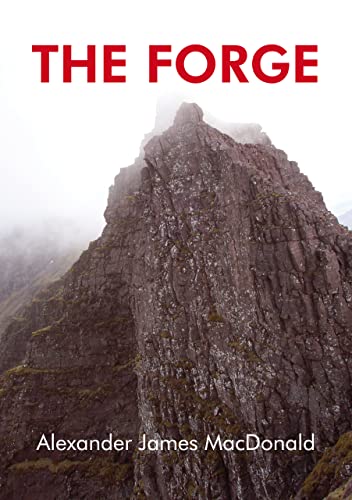
However, it now has its own crime thriller. Free Kirk or Calvinist noir, if you will, is with us in the form of Alexander James Macdonald’s The Forge.
*** *** ***
It is nearly half a century since I first met Alex Macdonald. Fifty years, or 49 to be precise. I can hardly believe it, but…
… there I am on the doorstep of the Free Church of Scotland manse in Bishopbriggs, nervous at what I’m about to encounter. I’m 17, maybe 18, and I come from the brash, noisy, just-discovering-rock’n’roll end of west of Scotland Gospel Hall evangelicalism, and the Free Kirk? That’s all ancient, crusty, bellowing ministers raining down hellfire and Calvinism or both on a rump of doddering ancients. Probably in Gaelic. No music save the unaccompanied psalms. What could a Free Kirk clergyman want with a longish-haired student, his guitar and collection of Larry Norman ripoffs?
Opening the door is a skelf-thin bearded young man in jeans, hair longer than mine, and in his house is a guitar, some harmonicas and a truly excellent collection of Bob Dylan records. It turns out that Alex can do a far more convincing Zimmerman than me and his knowledge of Bob’s canon is exemplary…
Gigs follow, me in Bishopbriggs in front of the rowdy group of kids Alex welcomes from nearby Springburn, Alex at the Glasgow University Christian Union. I take a wandering path after university that leads me through the stranger corners and more lurid aspects of belief and then out into journalism, broadcasting, books, and finally to Shetland, home to a cheerful weather-worn Norse paganism. Alex becomes minister of Buccleuch and Greyfriars Free Church in Edinburgh, and attains some eminence in religious circles: moderator of the Free Kirk general assembly, author, teacher. Neither of us ever gives up on Bob Dylan or rock’n’roll, though we lose touch for many years. Finally, a still very sprightly Alex retires from the ministry and – what else – forms a band, tours, makes CDs, the first of which, Like a River, ends up in my hands at BBC Radio Scotland. There is a song on it called The Fall of Tam Moncrieff, which I play on air and describe as “A Calvinist Lily, Rosemary and the Jack of Hearts. It could be a film.”
Well, it isn’t a movie yet, but it has become a book. The Fall of Tam Moncrieff is the tale of a young West Highlander who (spoiler alert!) dies at the hands of an Edinburgh drug cartel His grandfather, Dan Mackay, travels to Edinburgh, steals a vast quantity of drugs and cash, and heads north, pursued by heroin-dealing Tam Moncrieff and henchmen. On the slopes of the mountain An Teallach in Ross-shire, a reckoning takes place.
That’s the song. The book – The Forge – expands the story satisfyingly to provide an insight into Dan’s background, Free Church theology, Scottish history and geography, and the murky depths of an Edinburgh we’re familiar with from the likes of Ian Rankin’s Rebus novels, Kate Atkinson’s Jackson Brodie in print and on TV, and Neil Forsyth’s epic telly trilogy Guilt.
What The Forge does, thrillingly and with humour as well as uncompromising brutality and bloodshed, is probe the notion of human action and apparently ferocious retribution in the context of real belief in a loving, if implacably just God. The players in The Forge are all fallible but ultimately forgivable, evil but with the (even remote) possibility of redemption. Dan Mackay, the hero, has terrible things in his past, skills that make him a kind of OAP John Wick, and grace is for God to offer. Dan, in one of the most memorable lines in both song and book, “comes in judgement, not in grace”. He offers mercy, but when it is refused, he acts for the sake of the greater good. Nemesis.
If The Forge reminds me of anything it’s John Buchan, with, as historian Owen Dudley Edwards points out on the cover, some of Stevenson and Scott as well. But there’s also an evident authorial affection for the best of American noir, notably James Elroy, James Crumley ( who also has a souped-up van in I think The Last Good Kiss) James Sallis and Alex’s namesake Ross Macdonald. Sin, death, redemption and revenge are perennial noir tropes, and Alex has delved into the miry clay of crime fiction’s hinterland. He has learned well: The Forge has tremendous pace. And detailed knowledge not just of theology, etymology, geography and history, but malt whisky – Clynelish, great choice – wine (Cloudy Bay, again, a fine drop) and the arcane science of dropping a Cosworth engine into a Transit van.
As for Dan’s sheepdog, Fleet. I don’t want to talk about that.
The book is full of grief, family tragedy, a real insight into the landed politics of the west highlands and a memorably harsh portrayal of the gentry, As you may expect from a boy who grew up in the Strath of Kildonan, Clearances Central.
I read the book immediately after Francis Spufford’s marvellously foul-mouthed and highly caffeinated treatise – rant may be a better word – on Christianity Unapologetic: Why, despite everything, Christianity can still make surprising emotional sense, which ends with the lovely phrase: “Far more can be mended than you know”. Spufford’s book is formidable, powerful, but rooted in a loose-limbed, Anglicanism: Fuzzy grace, or a faith not far from artistic appreciation and a susceptibility to the glories of ecclesiastical architecture. The Forge is more elemental – more existential, if you like. Without necessarily embracing Alex’s beliefs these days, I felt more at home in its mapping of mountainous, extreme Calvinist territory. It’s uncompromising in its belief, sometimes disturbingly so, but, like all the Free Kirk folk I’ve met over the years (maybe I’ve been lucky), tremendous, fascinating, stimulating fun to be with.
The Forge, by Alexander James Macdonald, published by the author via Amazon in Kindle, hardback and paperback editions. Currently £3.99 on Kindle here
You can hear (and watch) the Alex Macdonald band’s song The Fall of Tam Moncrieff here

Leave a comment